Thursday, December 15, 2011

The nuclear industry is taking some hits...

I started this post a while ago (back in March, to be exact), and recent events have made it still more relevant.  In the immediate wake of the Fukushima accident, there were a couple of bad news announcements:


If you read the letter that Jaczko sent back to the White House Chief of Staff, it really reads like a megalomaniac trying to plead his case.  Throw the bum out.  Or at least, put Ostendorff in as the new Chairman.

Anyhow.  The above incidents are pretty detrimental to the nuclear industry, that was trying to make a go of it again in the US.  And it certainly makes the road a little rougher for the Small Modular Reactor crowd.

Which is unfortunate.  SMR's are a promising way to create domestic jobs and power our future.

Wednesday, December 7, 2011

Innovation

"Propose to an Englishman any principle, or any instrument, however admirable, and you will observe that the whole effort of the English mind is directed to find a difficulty, a defect, or an impossibility in it. If you speak to him of a machine for peeling a potato, he will pronounce it impossible: if you peel a potato with it before his eyes, he will declare it useless, because it will not slice a pineapple. Impart the same principle or show the same machine to an American or to one of our Colonists, and you will observe that the whole effort of his mind is to find some new application of the principle, some new use for the instrument."
Charles Babbage, 1832.

Charles Babbage is most famous for his difference engine, which could arguably be considered the first computer ... but he was a very smart individual in other fields as well, including astronomy, cryptography, and is even credited with inventing the cow catcher.

This post is just a wish that more Americans would act like the Americans depicted by Babbage nearly two hundred years ago, and less like the Englishmen.  Ask yourself daily which camp you're acting in.

Wednesday, November 23, 2011

A Societal Abdication of Responsibility

There's an alarming trend here in political society, and I don't like it.


Look, all of the above are examples of people trying to worm their way out of previous responsibilities, agreements, and commitments -- and have the government bail them out.  I think that's unconscionable.  There are very real costs associated with every one of those bailouts, and it's not fair to put that burden on Uncle Sam.  John Sununu put it extremely well in last week's issue of Time magazine:
Lost amid this economic activism is the principle that laws should clarify and facilitate the process for dealing with insolvencies but never pretend they can be avoided.  To think otherwise constitutes a form of legislative arrogance ... Too many lawmakers believe government can oversee, manage or invest with more insight and efficiency than the marketplace. [emphasis added]
An inherent facet of our economy, one that must be acknowledged and embraced, is that something like 10% of all American companies fail every year.  As painful as it is in the short term, failure -- and learning from those failures -- is a fundamental part of what makes our society stronger.  Failures happen.  Society needs to address those failures (and I think that, for the most part, it has), but in no way is the government responsible for preventing those failures.  And while I have sympathy towards those who put themselves $100,000 in debt in pursuing their degree in art history, as a taxpayer, I feel no obligation towards bailing them out.  Those students knew darned well what the obligations were for student loans, and what their chances were for employment on the other side.

People agree to commitments all the time.  I wish people would think a little more carefully about the implications before they make big commitments.

Wednesday, November 9, 2011

Every Accident Can Be Prevented ... but At What Cost?

It has become popular and trendy in most business circles to tow the party line of, "Every Accident Can Be Prevented."  Safety, safety, safety.  Slips, trips, and falls.  Electrical hazard safety.  Ladder safety.  Ergonomics.  It's everywhere, and we often have to sit through endless sfaety videos about why we need to do this, pay attention to that, be on the lookout for gremlins ... and now I see this philosophy creeping into the hallways:


Yes, my place of employment has now taken to putting up mirrors on the corners of the hallways, in order to prevent burns from hot coffee that might be incurred by two people bumping into each other.  I also recently saw a street crossing, with a pile of orange flags at each end of the crosswalk.  The thinking is you're supposed to grab a flag and wave it as you cross the street, so cars don't hit you.

Here's what I get: liability is expensive.  In the construction industry, it's bad news if your company has a reputation of being unsafe.  Lawsuits are absurdly expensive, to the tune of $1M+ for injury, lawyer fees, and additional insurance costs, and they can skyrocket from there.  And it's additive: have 1 accident, and your comapny's accident insurance goes up.  So, sure, it makes financial sense for a company to invest $100,000 in making an environment safer, if they think it'll help prevent a $1M accident that only has a 10% chance of occurring.  In industries where people work in close proximity to large, rotating equipment -- it makes a lot of sense to ensure people don't get caught in the gears.

Here's what I don't get: the unbridled, pervasive, never ending burden of safety requirements, and the safety officer's unchecked ability to Stop Work for an arbitrarily small potential safety issue in non-hazardous environments.  Nobody seems to calculate the cost, the reduced ability to do work, the impact to productivity, or the imapct to morale of requiring everyone to take three levels of electrical safety training until they can work on their 100V, milli-amp equipment again. (Note to non-technical readers: a high voltage is not necessarily dangerous.  The spark you get from static electricity in the wintertime can be 6,000 volts or higher.  No big deal, becuase the current is really low.)  Or the lost time due to requiring everyone in the company to sit through this year's collection of 12 safety videos, complete with quizzes at the end.

Note to safety officers: As an office worker, I assure you, I have forgotten everything about that ladder safety quiz within 2 weeks.

Here's what I also don't get: A draconian, inflexible rule system.  In many instances, you're given limits within which you're allowed to do your work.  If you're a Level 1 worker, for instance, you get to do A, B, and C.  But if you want to do 1.000000001C -- something just barely outside the norm of C -- then suddenly the door slams down and you need to get Level 55 worker training, which takes six months and costs thousands of dollars.  Safety officers gleefully point to the rule book and say, "I'm not authorized to grant an exception.  This is for your own good."

Sometimes I pine for the (perceived) halcyon days of the 1950's and 1960's, where I get the impression that you could saunter down to your technical area, and start doing work.  Look, you pay us professionals well and we're smart people; when we get into unfamiliar territory or we do something we're not comfortable with, we ask for help.

I fear that the "scope creep" of allowing people to do less and less because of some infinitesimally small chance that something might go wrong is creating a "never try" attitude in society.  Preventing me from doing anything because something might go wrong seems a perverse motivation, after they ostensibly hired me because of my intelligence and dilligence.  A different society, one that allows and accepts a certain low-level of accidents could be a very productive society indeed.

Saturday, November 5, 2011

November 11th, 2011

There's a big day coming up -- and this is something you can share with friends, family, and co-workers.

This Friday is Veterans Day.  It's held on November 11th (or observed on the nearest weekday, since it is a Federal holiday and all), in honor of the signing of the Armistice that officially ended World War I.  It was signed on the eleventh hour of the eleventh day of the eleventh month ... of 1918.

But this year's Veterans Day will be particularly notable, because this is the first time it will be held in a year ending in 11.  Here's a preview of what you can expect to see -- TWICE -- this coming Friday:

My Casio LW-200H, which I'm very happy with for running and workouts.

Oooooh, it's all 1's:

  • The hour is 11.
  • The minute is 11.
  • The seconds are 11.
  • The month is 11.
  • The day is 11.
  • The year is '11.

The delay on my camera stinks; it took multiple shots and resets of the watch to time it correctly.  You may now return to your usual level of Geekery.

Tuesday, November 1, 2011

An Engineer's Guide to Raising a Kid, Part II

Due to the overwhelming success of the previous post (a whopping 18 page views...), we're doing a Part II.  That, and the fact that I forgot some very important elements in Part 1.

(Aside: I thought my posts on how to build an igloo were a gift to the internet that would be a lot more popular than they have been -- it was real-world advice using equipment and tools that most everybody could probably find in their closets and kitchen.  Alas, my site doesn't show up anywhere in the top 5 pages of Google hits of "How To Build An Igloo."  How to Build an Igloo in Minecraft even comes up before my page.  Sigh.  It seems my attempts at giving instruction to the world are falling on deaf ears.)

Anyhow, the following have also been instrumental in helping take care of Beth over these past 7 months:

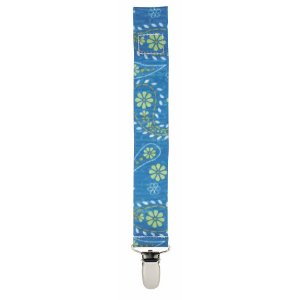
8.  A Binky Clip.  The picture says it all.  One end velcros to the pacifier, the other end clips to a seat belt, corner of shirt, edge of car seat ... anything.  It really has been handy.  Think about it: every child is going to drop things; it's one of the things they're best at.  (It's also especially cute when they drop things over the side of their high chair, lean over the side to look at it on the ground, and then look up at you expectantly, like, "Aren't you going to get that?  Little help here?"  Repeat 50 times.)  This makes recovery easier, and even self-recovery possible.

At 7 months, Beth is rapidly losing interest in pacifiers as they were originally intended, but she still enjoys playing with them in general.  For those who are opposed to pacifiers: more power to you, but ouch -- that's a tough learning curve those first few months.

9.  A Glider and Ottoman.  I seriously can't believe I forgot this in Part I.  While everyone is different, you will probably spend more time with your baby in this chair than engaged in any other activity.  We got ours (lightly used) off of Craiglist, and have put thousands of miles on it since then.

Also, a note: I purposely picked a somewhat ugly color to use for the picture, to illustrate a point.  At 3 in the morning, do you really think you're going to care what color the chair is?  There's only one thing that matters: comfort.  Give them all a test drive.  If there is a squeak, or a bump, or a creak -- forget it.  It must rock absolutely silently, or else it will drive you bonkers.

And, yes, chances are, the ottoman is worth it.

10.  A swing.  There are lots of varieties of these, and WOW they can get expensive.  We got ours from a consignment store for $15, and it has been money well spent.  In our case, it's a great place to safely put Beth down for a while, keep her happy, and maybe even let us take a nap.  Other friends of ours have a particularly fancy one, complete with iPod attachment, that also can accept a car seat.  That's actually tempting (the car seat, not the iPod part): being able to plunk her into the swing while still in her car seat would be valuable.  But that's in the "nice to have" category.

The only complaint?  Ours runs on 4 D-cell batteries, and ONLY on batteries.  Since these can be used for 2+ hours at a stretch, it would be very convenient to be able to just plug it in.  Oh, well.  We just go thru 4 D batteries about every three weeks.  (Our parents tell us about the OLD models that were wind up, and supposedly had the loudest, crankiest wind-up mechanism in the world, that was guaranteed to wake the baby if you wanted to wind it back up.  So, it could be worse.)

11. Advice.  Everyone is probably going to try to give you advice, even this blog.  Every kid is different, every parent is different, every situation is different.  Take everything with a grain of salt.

But some of the best, most reassuring "advice" I heard actually came from a neighbor of ours.
"You think you have things down to a routine, and then, WHAM!  It's right back to square one again."
I found that particularly comforting a variety of times.  Beth did change routines on us, many times, and is still changing things up on us.  It was reassuring for me to know that other people had gone through similar events and had been similarly stymied by inconsistent or different behavior.  You can try to be consistent, and you can try to establish routine, but for those first few months, a newborn baby is going to do whatever a newborn baby feels like it should be doing at the time.

And that's about it!  Happy Parenting.

Sunday, October 23, 2011

An Engineer's Guide To Raising a Kid

Beth will turn 7 months just a few short days from now, and I thought it would be neat to look back and share some of the things we have found particularly useful and handy over that time.  Note that television isn't anywheres near this list.  :)

Caveat Emptor: Every kid is different.  In discussions with friends and family, it has become very apparent that what works well for one kid and one family does not work at all for another.  My publishing of this list is in no way trying to influence the values, mores, habits, or style of your child's upbringing.  People start bristling with rage pretty quickly if you try to do that.

1.  The Happiest Baby On The Block.  More than any other book we read, this one gave us the most confidence that, yes, we might actually have a chance at soothing a crying newborn.  It's not perfect -- nothing is and we still had our share of late nights and early mornings -- but it sure helped.  Also consider searching for videos of how to do some of the steps mentioned here on YouTube.

Chillin' in her Boppy.
2.  A Boppy.  This horseshoe-shaped pillow has been instrumental in countless feedings, naps, and general soothing sessions.  Other pillows could probably serve the purpose, but we have consistently reached for this one.  Also useful for safely "stashing" the kid when you want to securely place her in one area.

3.  Moby Wrap.  This clever contraption is really just a 25 foot long, extra-wide scarf.  But some fairly clever people (resourceful mothers, perhaps?) have found interesting ways to fold and wrap the thing around you so that it can securely hold your newborn, infant, and toddler in a variety of ways.  This was very helpful for us for the first few months; it was great once you got her loaded up and you had both hands free to do other things.  Babies usually sleep peacefully in this thing because they're all swaddled up and secure.  Fair warning, though: they get hot, and I wouldn't want to wear this thing in the dead heat of summer.  We have used ours a lot less since Beth turned about 4 months.

En route to the Farmer's Market.
4.  Baby Backpack.  You can pay a lot of money for these, so I recommend asking for these as a gift.  We inherited an old Kelty brand backpack from my sister, and have used it on many day hikes, walks to the Farmer's Market, and even while vacuuming.  It's great to put the kid back there so your hands are free, and she often falls asleep.  Two small warnings: it's slightly unnerving knowing you have your baby back there and you can't see her (is she falling over? can she still breathe?), but after a few minutes you learn to trust the things.  Also, she now has HER hands free, and can grab and pull your neck hair at will.

5.  Baby Einstein Take-Along Tunes.  We call this her "radio," and it's like crack.  When nothing else will soothe her, the flashing light and upbeat classical music will usually lull her for 10 minutes of blissful peace and quiet.

Before our first 5K with Beth.
6.  A BOB Stroller.  Okay, we splurged on this one.  And even then, we bought last year's model on clearance sale from REI. (And looking at the prices of this year's model ... holy moly ... it's not worth $450.  Look on Craigslist or eBay.)  Initially, I thought I would never spend more than $100 on a stroller -- and to be honest, you probably don't need to.  But a high quality, easily-foldable, great-to-run-with stroller has allowed my wife and I to maintain an active lifestyle by jogging with Beth (and the dog!) frequently.  And the stroller is super maneuverable, and will easily navigate just about anywhere.  We've even taken it with us on trail hikes, although that was probably a less-than-brilliant idea.

6.  Interlocking Floor Mats.  This was last weekend's project, where we converted a room into Beth's playroom, so the verdict isn't quite in yet, but it sure looks like fun.  I wish I had a room like this when I was 6 months old.  Sam's Club had a great deal on 0.56" thick, interlocking foam mats, and it was really easy to cut them to size to fit perfectly in the room.  Now we can place her in the playroom and she can romp around all she wants.

All in all, it can result in one cute kid.
Beth, happily surrounded by toys.

Wednesday, October 12, 2011

The engineer's fascination with adjectives

In multiple former jobs, many of our latest products were adorned with the modifiers "Advanced" or "Next Generation" in order to make them sound sexy, cool, and modern.  The folly of this was recently brought to my attention while reading about RSA's woes from a cyber attack.

The latest form of cyber attack now goes by the moniker "Advanced Persistent Threat."  Described in detail in Wikipedia, the APT is distinguished from the previous forms of cyber attack, such as "Distributed Denial of Service."  The big thing about APT is that it usually involves multiple people (although DDOS's usually do, too), it's "advanced," and it seems to last for a while.

My problem is that everything is advanced these days.  So, what adjective do we reserve for the next form of cyber attack?  The Very Advanced Persistent Threat?  Oh, I know -- we'll call it the Next Generation Persistent Threat.  Look, the things that make an "Advanced Persistent Threat" today are going to be commoditized and brought to the masses within a year or two, and are going to become commonplace.

I think you see where I'm going with this.  Calling something Advanced is short sighted about the future, as today's "advanced" is tomorrow's "obsolete."  Or, worse yet, today's Advanced is tomorrow's "No Way Do I Have To Be Backwards Compatible With That Piece Of Crap."

If I'm ever a project manager, developing a cool new technology, I will be sure to stay far away from calling anything "advanced" or "next generation" or "new concept."  Instead, I think titles and project names should simply be descriptive:  Widget 2.0, Multi-Peer Sharing Algorithm, or Shiny Plastic Toy (to distinguish it from the previous Dull Plastic Toy).  The next generation of engineers can thank me fore it.