Saturday, December 31, 2011

A Time To Be Thankful

I really enjoy this Thanksgiving / Christmas / New Year's time of year, as it provides some time off from work to appreciate some of the smaller stuff and take your bearings.

So, I'd like to take a moment and thank the folks who work diligently, without much credit or fanfare, helping make this thing we call "society" work.

1.  Car safety engineers.  A while ago, I got in a car accident.  This was my car:

This picture was taken from the junkyard, well after the accident.  Multiple airbags deployed, two cars totalled (including mine), a third was seriously dented, and everyone walked away from it.  I think that's pretty amazing, and would like to extend a heartfelt "thank you" to all the engineers out there who carefully consider accident scenarios in the design of their cars.  Wow.

2.  All the folks at Amazon's Fulfillment Centers who dutifully take our orders.
Amazon fulfillment center.  Click for YouTube video of how it all works.

Amazon does crazy, crazy amounts of business: on the Monday after Thanksgiving, Amazon sold more than 158 items per second.  Actually selling that much stuff is one impressive feat; I think an even more impressive feat (logistically) is shipping and tracking all that stuff.  So, my hat is off to the folks who set that up, and my hat is off doubly so for the people who worked hard to fulfill all our orders.  They don't get enough credit.

3.  The software engineers and hardware techs who were able to successfully absorb the impact of 6.8 million devices being activated on Christmas Day.  Happily, I can count myself among those 6.8 million, but you don't survive that kind of hit on your network without a lot of forethought and intelligence.   

About a quarter of a billion apps were downloaded on Christmas, which is twice the normal load in December and three times what was downloaded last year.  So, a profound thank you to the network administrators and people who kept the servers humming, even under a crushing load like that on Christmas.

The list could go on and on: police officers, radio and TV engineers, security guards at important places, mail delivery folks (UPS, FedEx, USPS, DHL, etc.) ... The fact is, there are a tremendous number of unsung heroes who quietly but determinedly go about their business, ensuring that the rest of us can have safe and happy holidays.  Society doesn't just run automatically; it works through the hard work and dedication of millions of folks.

Thanks to all of you for making our society work.  Here's to best wishes for a safe and prosperous 2012.

Sunday, December 18, 2011

The Differential

When I was about six years old, I remember playing with my Matchbox toys and noticing that, on a curve, the outside wheels had to spin faster than the inside wheels.  Matchbox toys at the time were connected by a simple axle, and the little bit of skidding had no impact on those smooth, plastic wheels.


I asked my Dad how it worked on real cars.  My Dad, a lawyer, had no idea, and just responded, "It's very complicated machinery in there."  (Well, to be honest, he could very well have been tired with my questioning and did not want to get into the inner workings of a the gears.)


The complicated machinery is now known as a differential, and I've always thought it was a little piece of magic.  (The other impressive piece of magic is the now old-style planetary gear system used on automatic transmissions, but that's for another day.)  So, I present to you, for your enjoyment, a 1937 movie about differentials and how they work.  It's very impressive and very instructive. (Skip ahead to the 3:30 mark to jump over the repetitive, long introduction material.)


I only wish I had YouTube when I was six.

Thursday, December 15, 2011

The nuclear industry is taking some hits...

I started this post a while ago (back in March, to be exact), and recent events have made it still more relevant.  In the immediate wake of the Fukushima accident, there were a couple of bad news announcements:


If you read the letter that Jaczko sent back to the White House Chief of Staff, it really reads like a megalomaniac trying to plead his case.  Throw the bum out.  Or at least, put Ostendorff in as the new Chairman.

Anyhow.  The above incidents are pretty detrimental to the nuclear industry, that was trying to make a go of it again in the US.  And it certainly makes the road a little rougher for the Small Modular Reactor crowd.

Which is unfortunate.  SMR's are a promising way to create domestic jobs and power our future.

Wednesday, December 7, 2011

Innovation

"Propose to an Englishman any principle, or any instrument, however admirable, and you will observe that the whole effort of the English mind is directed to find a difficulty, a defect, or an impossibility in it. If you speak to him of a machine for peeling a potato, he will pronounce it impossible: if you peel a potato with it before his eyes, he will declare it useless, because it will not slice a pineapple. Impart the same principle or show the same machine to an American or to one of our Colonists, and you will observe that the whole effort of his mind is to find some new application of the principle, some new use for the instrument."
Charles Babbage, 1832.

Charles Babbage is most famous for his difference engine, which could arguably be considered the first computer ... but he was a very smart individual in other fields as well, including astronomy, cryptography, and is even credited with inventing the cow catcher.

This post is just a wish that more Americans would act like the Americans depicted by Babbage nearly two hundred years ago, and less like the Englishmen.  Ask yourself daily which camp you're acting in.

Wednesday, November 23, 2011

A Societal Abdication of Responsibility

There's an alarming trend here in political society, and I don't like it.


Look, all of the above are examples of people trying to worm their way out of previous responsibilities, agreements, and commitments -- and have the government bail them out.  I think that's unconscionable.  There are very real costs associated with every one of those bailouts, and it's not fair to put that burden on Uncle Sam.  John Sununu put it extremely well in last week's issue of Time magazine:
Lost amid this economic activism is the principle that laws should clarify and facilitate the process for dealing with insolvencies but never pretend they can be avoided.  To think otherwise constitutes a form of legislative arrogance ... Too many lawmakers believe government can oversee, manage or invest with more insight and efficiency than the marketplace. [emphasis added]
An inherent facet of our economy, one that must be acknowledged and embraced, is that something like 10% of all American companies fail every year.  As painful as it is in the short term, failure -- and learning from those failures -- is a fundamental part of what makes our society stronger.  Failures happen.  Society needs to address those failures (and I think that, for the most part, it has), but in no way is the government responsible for preventing those failures.  And while I have sympathy towards those who put themselves $100,000 in debt in pursuing their degree in art history, as a taxpayer, I feel no obligation towards bailing them out.  Those students knew darned well what the obligations were for student loans, and what their chances were for employment on the other side.

People agree to commitments all the time.  I wish people would think a little more carefully about the implications before they make big commitments.

Wednesday, November 9, 2011

Every Accident Can Be Prevented ... but At What Cost?

It has become popular and trendy in most business circles to tow the party line of, "Every Accident Can Be Prevented."  Safety, safety, safety.  Slips, trips, and falls.  Electrical hazard safety.  Ladder safety.  Ergonomics.  It's everywhere, and we often have to sit through endless sfaety videos about why we need to do this, pay attention to that, be on the lookout for gremlins ... and now I see this philosophy creeping into the hallways:


Yes, my place of employment has now taken to putting up mirrors on the corners of the hallways, in order to prevent burns from hot coffee that might be incurred by two people bumping into each other.  I also recently saw a street crossing, with a pile of orange flags at each end of the crosswalk.  The thinking is you're supposed to grab a flag and wave it as you cross the street, so cars don't hit you.

Here's what I get: liability is expensive.  In the construction industry, it's bad news if your company has a reputation of being unsafe.  Lawsuits are absurdly expensive, to the tune of $1M+ for injury, lawyer fees, and additional insurance costs, and they can skyrocket from there.  And it's additive: have 1 accident, and your comapny's accident insurance goes up.  So, sure, it makes financial sense for a company to invest $100,000 in making an environment safer, if they think it'll help prevent a $1M accident that only has a 10% chance of occurring.  In industries where people work in close proximity to large, rotating equipment -- it makes a lot of sense to ensure people don't get caught in the gears.

Here's what I don't get: the unbridled, pervasive, never ending burden of safety requirements, and the safety officer's unchecked ability to Stop Work for an arbitrarily small potential safety issue in non-hazardous environments.  Nobody seems to calculate the cost, the reduced ability to do work, the impact to productivity, or the imapct to morale of requiring everyone to take three levels of electrical safety training until they can work on their 100V, milli-amp equipment again. (Note to non-technical readers: a high voltage is not necessarily dangerous.  The spark you get from static electricity in the wintertime can be 6,000 volts or higher.  No big deal, becuase the current is really low.)  Or the lost time due to requiring everyone in the company to sit through this year's collection of 12 safety videos, complete with quizzes at the end.

Note to safety officers: As an office worker, I assure you, I have forgotten everything about that ladder safety quiz within 2 weeks.

Here's what I also don't get: A draconian, inflexible rule system.  In many instances, you're given limits within which you're allowed to do your work.  If you're a Level 1 worker, for instance, you get to do A, B, and C.  But if you want to do 1.000000001C -- something just barely outside the norm of C -- then suddenly the door slams down and you need to get Level 55 worker training, which takes six months and costs thousands of dollars.  Safety officers gleefully point to the rule book and say, "I'm not authorized to grant an exception.  This is for your own good."

Sometimes I pine for the (perceived) halcyon days of the 1950's and 1960's, where I get the impression that you could saunter down to your technical area, and start doing work.  Look, you pay us professionals well and we're smart people; when we get into unfamiliar territory or we do something we're not comfortable with, we ask for help.

I fear that the "scope creep" of allowing people to do less and less because of some infinitesimally small chance that something might go wrong is creating a "never try" attitude in society.  Preventing me from doing anything because something might go wrong seems a perverse motivation, after they ostensibly hired me because of my intelligence and dilligence.  A different society, one that allows and accepts a certain low-level of accidents could be a very productive society indeed.

Saturday, November 5, 2011

November 11th, 2011

There's a big day coming up -- and this is something you can share with friends, family, and co-workers.

This Friday is Veterans Day.  It's held on November 11th (or observed on the nearest weekday, since it is a Federal holiday and all), in honor of the signing of the Armistice that officially ended World War I.  It was signed on the eleventh hour of the eleventh day of the eleventh month ... of 1918.

But this year's Veterans Day will be particularly notable, because this is the first time it will be held in a year ending in 11.  Here's a preview of what you can expect to see -- TWICE -- this coming Friday:

My Casio LW-200H, which I'm very happy with for running and workouts.

Oooooh, it's all 1's:

  • The hour is 11.
  • The minute is 11.
  • The seconds are 11.
  • The month is 11.
  • The day is 11.
  • The year is '11.

The delay on my camera stinks; it took multiple shots and resets of the watch to time it correctly.  You may now return to your usual level of Geekery.

Tuesday, November 1, 2011

An Engineer's Guide to Raising a Kid, Part II

Due to the overwhelming success of the previous post (a whopping 18 page views...), we're doing a Part II.  That, and the fact that I forgot some very important elements in Part 1.

(Aside: I thought my posts on how to build an igloo were a gift to the internet that would be a lot more popular than they have been -- it was real-world advice using equipment and tools that most everybody could probably find in their closets and kitchen.  Alas, my site doesn't show up anywhere in the top 5 pages of Google hits of "How To Build An Igloo."  How to Build an Igloo in Minecraft even comes up before my page.  Sigh.  It seems my attempts at giving instruction to the world are falling on deaf ears.)

Anyhow, the following have also been instrumental in helping take care of Beth over these past 7 months:

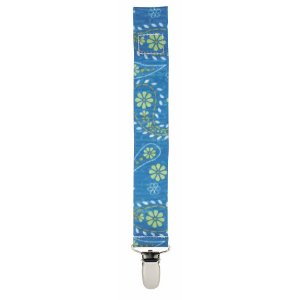
8.  A Binky Clip.  The picture says it all.  One end velcros to the pacifier, the other end clips to a seat belt, corner of shirt, edge of car seat ... anything.  It really has been handy.  Think about it: every child is going to drop things; it's one of the things they're best at.  (It's also especially cute when they drop things over the side of their high chair, lean over the side to look at it on the ground, and then look up at you expectantly, like, "Aren't you going to get that?  Little help here?"  Repeat 50 times.)  This makes recovery easier, and even self-recovery possible.

At 7 months, Beth is rapidly losing interest in pacifiers as they were originally intended, but she still enjoys playing with them in general.  For those who are opposed to pacifiers: more power to you, but ouch -- that's a tough learning curve those first few months.

9.  A Glider and Ottoman.  I seriously can't believe I forgot this in Part I.  While everyone is different, you will probably spend more time with your baby in this chair than engaged in any other activity.  We got ours (lightly used) off of Craiglist, and have put thousands of miles on it since then.

Also, a note: I purposely picked a somewhat ugly color to use for the picture, to illustrate a point.  At 3 in the morning, do you really think you're going to care what color the chair is?  There's only one thing that matters: comfort.  Give them all a test drive.  If there is a squeak, or a bump, or a creak -- forget it.  It must rock absolutely silently, or else it will drive you bonkers.

And, yes, chances are, the ottoman is worth it.

10.  A swing.  There are lots of varieties of these, and WOW they can get expensive.  We got ours from a consignment store for $15, and it has been money well spent.  In our case, it's a great place to safely put Beth down for a while, keep her happy, and maybe even let us take a nap.  Other friends of ours have a particularly fancy one, complete with iPod attachment, that also can accept a car seat.  That's actually tempting (the car seat, not the iPod part): being able to plunk her into the swing while still in her car seat would be valuable.  But that's in the "nice to have" category.

The only complaint?  Ours runs on 4 D-cell batteries, and ONLY on batteries.  Since these can be used for 2+ hours at a stretch, it would be very convenient to be able to just plug it in.  Oh, well.  We just go thru 4 D batteries about every three weeks.  (Our parents tell us about the OLD models that were wind up, and supposedly had the loudest, crankiest wind-up mechanism in the world, that was guaranteed to wake the baby if you wanted to wind it back up.  So, it could be worse.)

11. Advice.  Everyone is probably going to try to give you advice, even this blog.  Every kid is different, every parent is different, every situation is different.  Take everything with a grain of salt.

But some of the best, most reassuring "advice" I heard actually came from a neighbor of ours.
"You think you have things down to a routine, and then, WHAM!  It's right back to square one again."
I found that particularly comforting a variety of times.  Beth did change routines on us, many times, and is still changing things up on us.  It was reassuring for me to know that other people had gone through similar events and had been similarly stymied by inconsistent or different behavior.  You can try to be consistent, and you can try to establish routine, but for those first few months, a newborn baby is going to do whatever a newborn baby feels like it should be doing at the time.

And that's about it!  Happy Parenting.